Product Experience
Employee Onboarding Automation
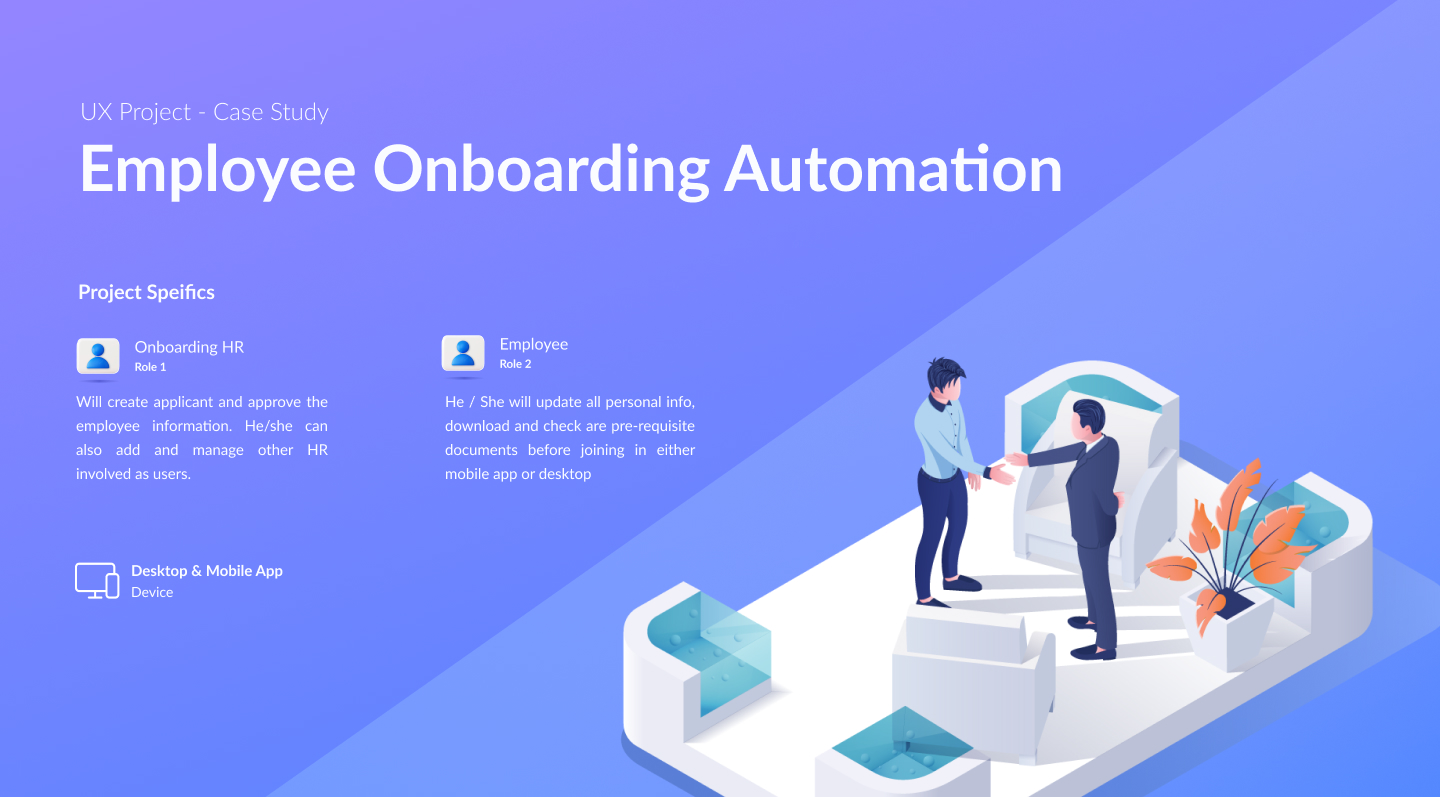
This project redesigned the employee onboarding experience for both HR admins and new hires by automating the most time-consuming, error-prone steps of the process. Before automation, HR teams managed document collection manually, orientations were scheduled in-person, and feedback was documented on paper. The solution introduced an HR Admin Dashboard (desktop) and an Employee Onboarding App (mobile & desktop) — reducing manual coordination, minimizing missed steps, and creating a smoother first-day experience for new joiners.
 1 / 9
1 / 9A Manual Process Straining Both Sides
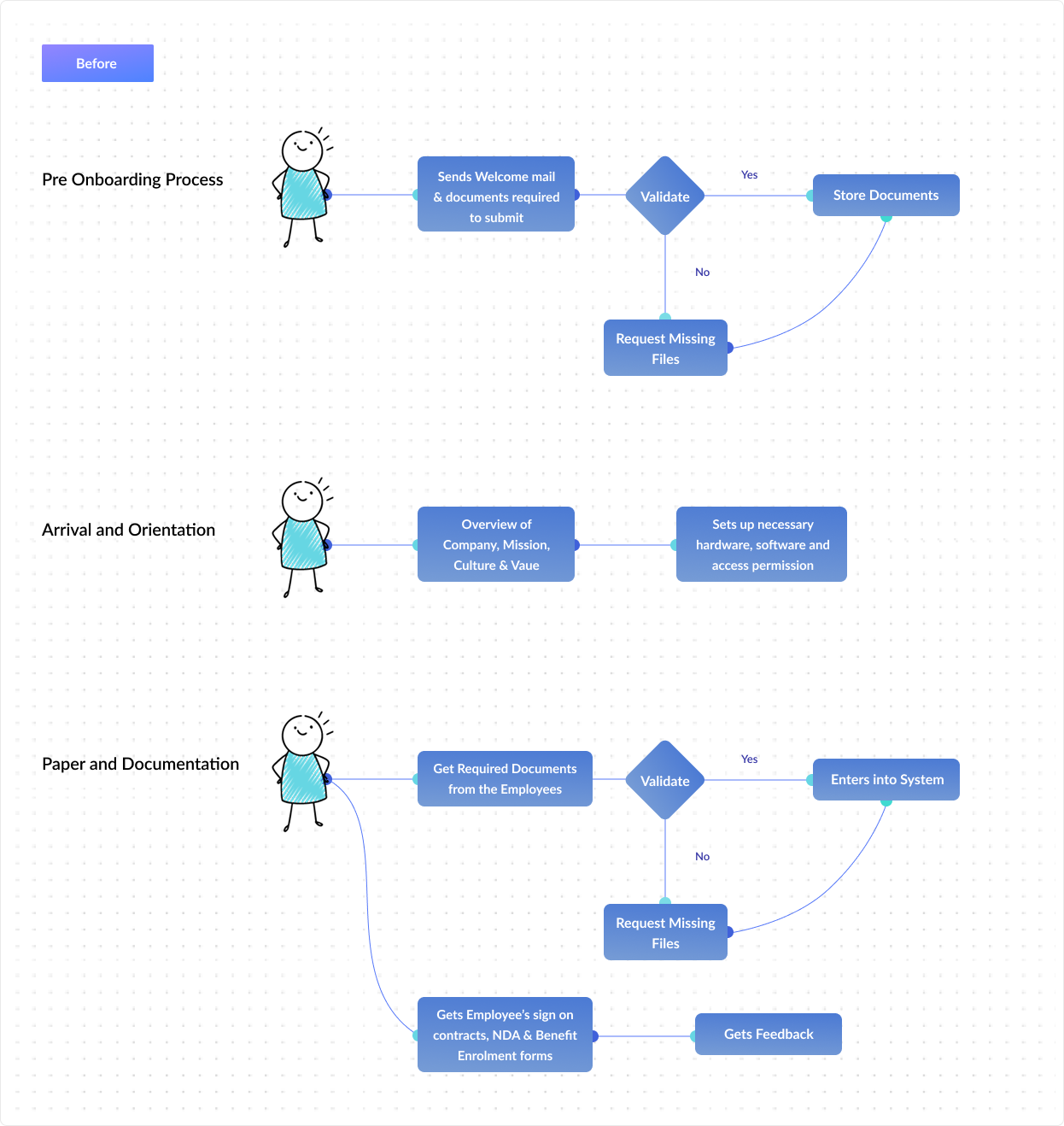
Before automation, HR administrators managed the entire onboarding process through email, paper, and manual coordination. Document collection required follow-ups, in-person orientations were scheduled regardless of employee readiness, and feedback was documented manually. New employees often missed steps, submitted incomplete documents, or attended orientation without context — creating a stressful first impression on both sides.
Inefficiency, Errors, and a Poor First Impression
HR teams consumed excessive time and energy on repetitive, tedious tasks — downloading documents, storing them in folders, validating manually, and creating employee records at the time of joining. For employees, the process was unclear and high-stakes: missing a document could stall their start date, and in-person orientation programs ran for hours without breaks.
- HR: Creating applicant records at time of joining became overwhelming — no pre-setup possible
- HR: Checking and validating documents was a lengthy, tiring process done entirely manually
- Employee: Missing or forgetting a required document caused delays and confusion
- Employee: Orientation programs organized by the company dragged on without breaks
- Employee: Too much process, not enough clarity — feedback took a full day to reach
User Journey Mapping Across Four Onboarding Phases
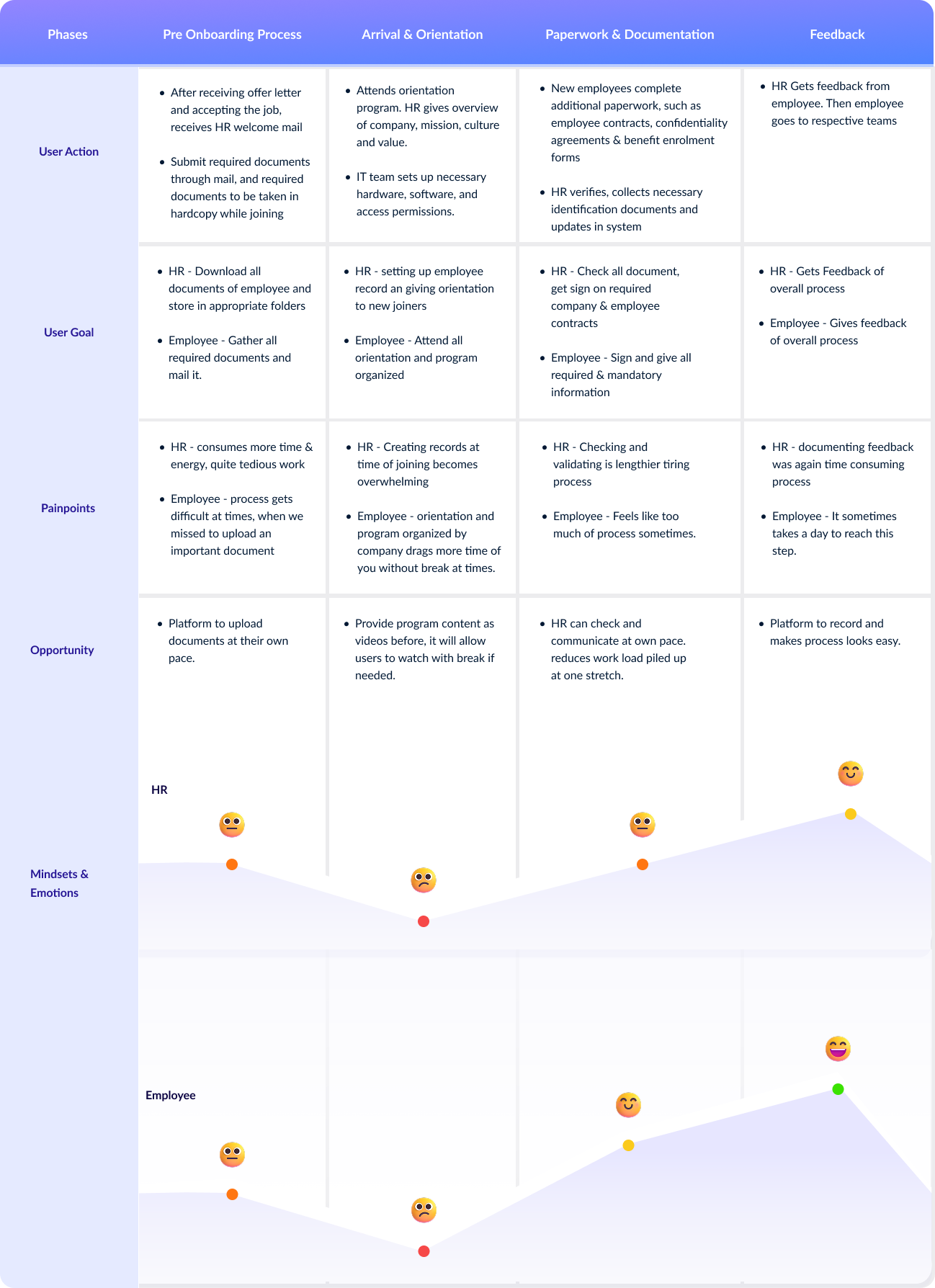
A detailed user journey map was built across all four phases: Pre-Onboarding, Arrival & Orientation, Paperwork & Documentation, and Feedback. For each phase, both HR and employee actions, goals, pain points, and opportunities were documented. The biggest insight was that the pain wasn't in the content of onboarding — it was in the coordination overhead and the inability to work at one's own pace.
Automating the Coordination Layer End-to-End
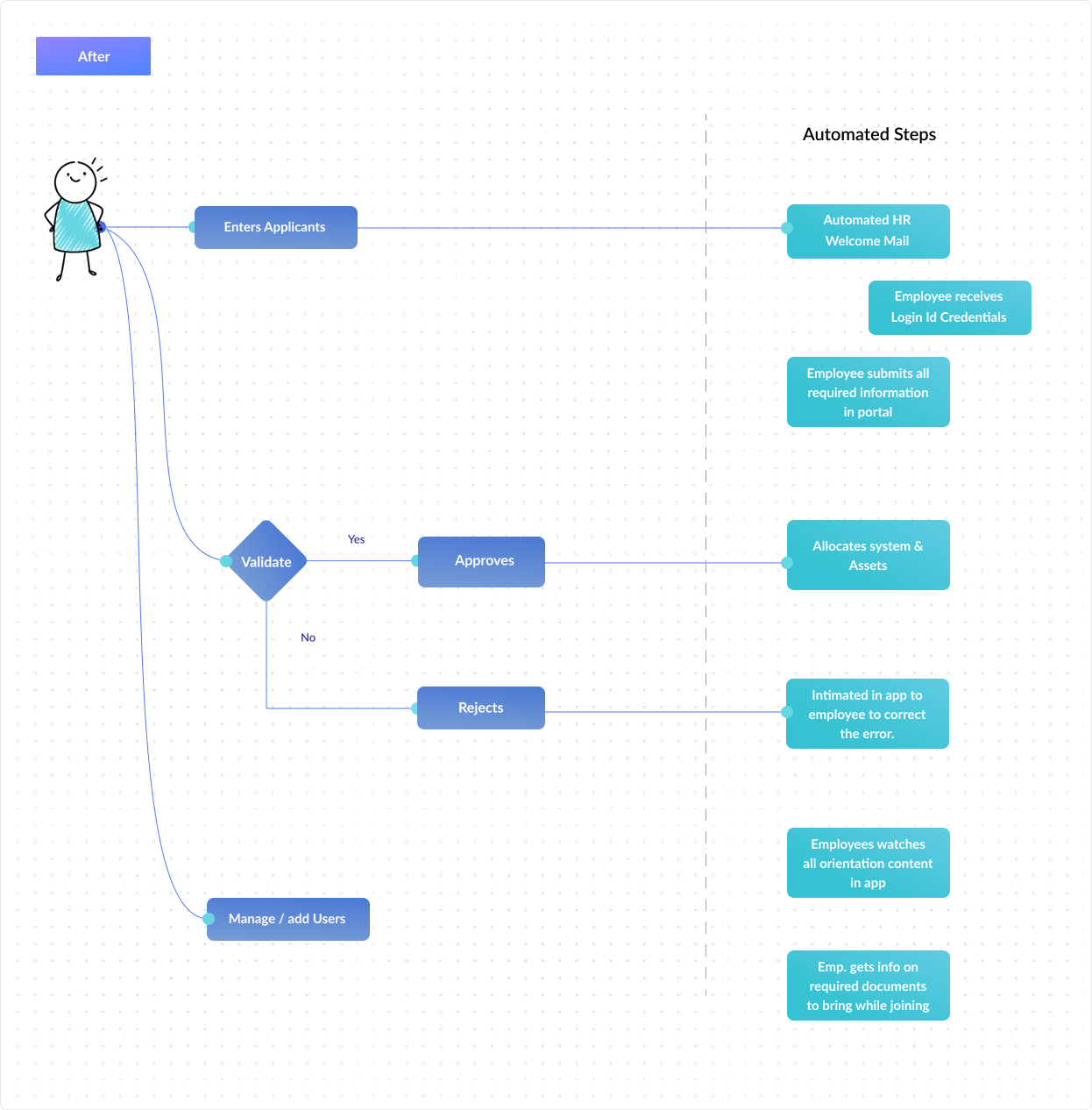
The redesigned system introduced automated decision points at every stage: document validation triggers in-app error flags; approved submissions automatically issue welcome emails and login credentials; orientation content is delivered as self-paced videos rather than scheduled sessions; contracts and NDAs are signed digitally. HR admins retain control through a dashboard — but routine coordination no longer requires their manual intervention.
HR Admin Dashboard — Manage, Approve, and Track
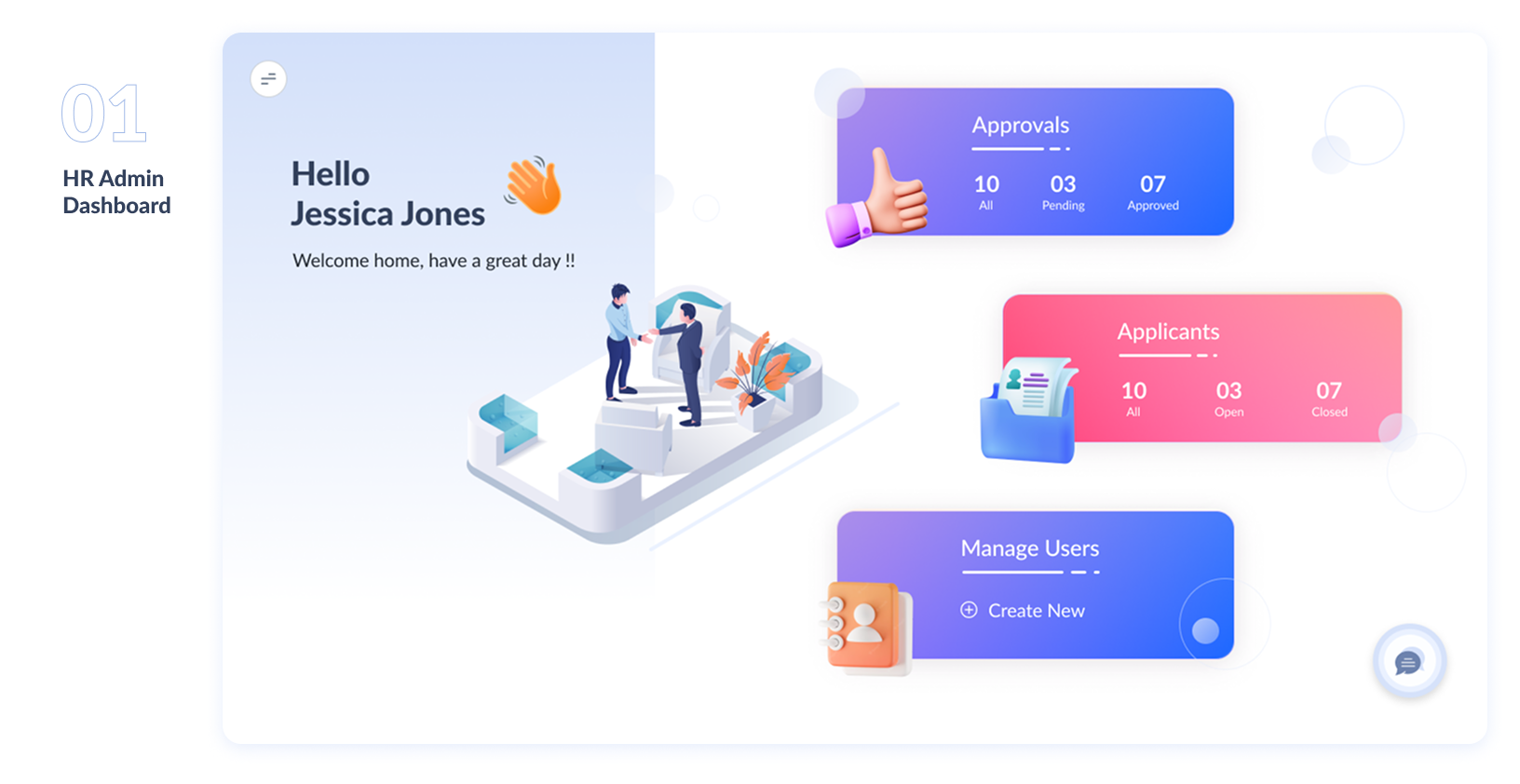
The HR Admin Dashboard (desktop) gives HR administrators a single platform to create applicant entries, manage user access, review submitted documents, and approve or reject them. When an applicant is validated, the system automatically allocates system access and assets, issues credentials, and sends the welcome mail — without HR manually triggering each step. Rejected documents prompt an in-app notification to the employee with instructions to correct and resubmit.
Onboarding App — Self-Paced, Step-by-Step, Error-Aware
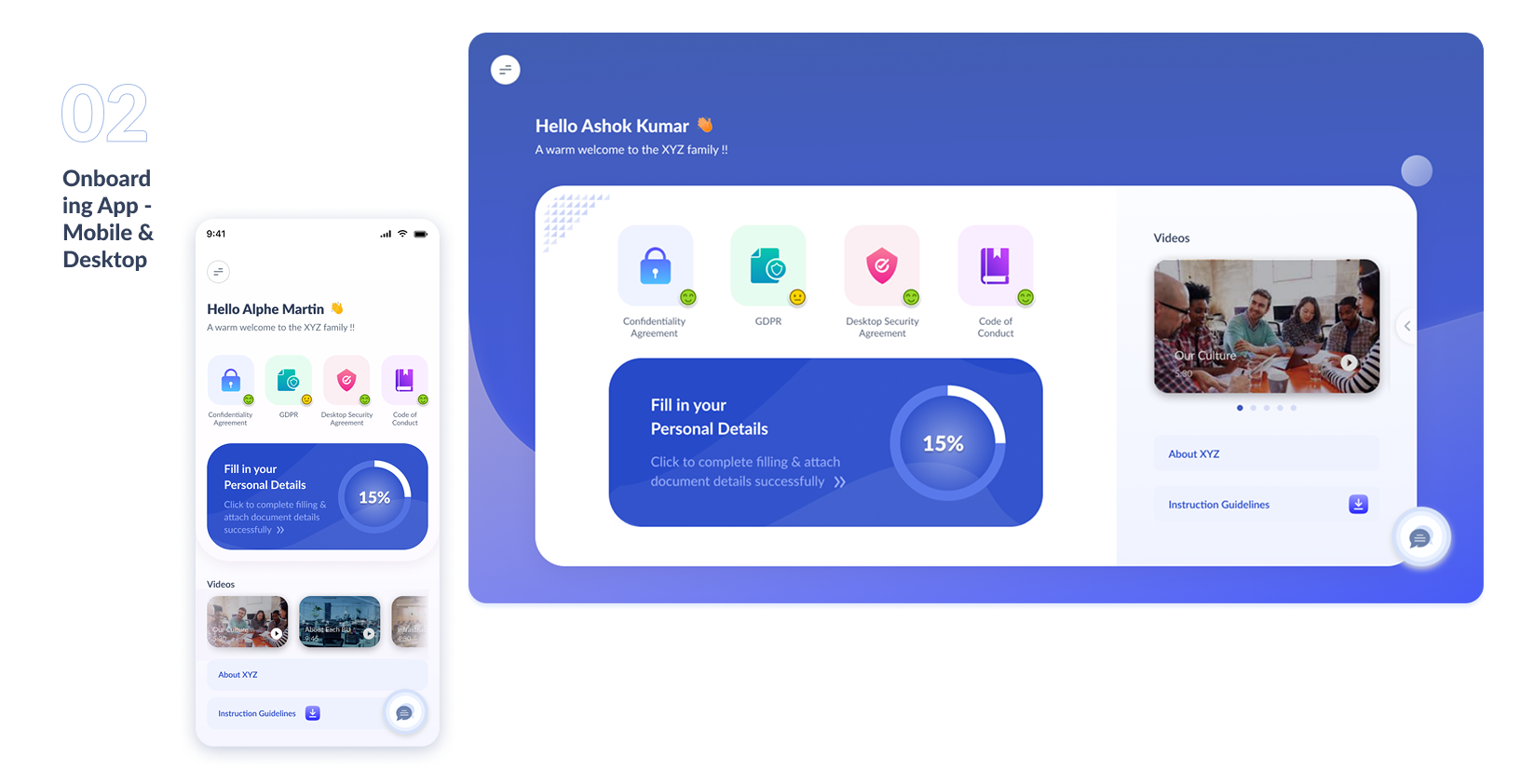
The Employee Onboarding App (mobile & desktop) guides new hires through every step at their own pace. Pre-joining, they receive a welcome email with login credentials and a list of required documents to upload. On or before joining day, they watch orientation content as videos — pausable, resumable, without being tied to a scheduled session. Contracts, NDAs, and benefit enrollment forms are completed digitally. Errors are surfaced immediately in the app with clear guidance on what to fix.
From Manual Coordination to Automated Flow
Automating the coordination layer removed the biggest sources of HR inefficiency and employee confusion. Document validation, credential issuance, system allocation, and feedback collection are now handled by the platform — not by email chains. New employees move through onboarding at their own pace, with clear progress indicators and immediate error feedback. HR admins focus on exceptions, not routine steps.
- Pre-joining document submission and validation fully automated — no email follow-ups required
- Orientation content delivered as self-paced videos — employees watch on their schedule, with breaks
- Digital contract and NDA signing replaces manual collection and filing
- Automated credential issuance once HR approves applicant records
- Feedback collection platform replaces manual documentation
Pace and Control Are the Core Levers
The most impactful changes weren't the ones that removed the most steps — they were the ones that gave both HR and employees control over when and how they completed each step. Orientation videos that employees could pause and resume had an outsized positive effect on perception. For HR, the ability to review and approve on their schedule — rather than in real-time coordination — reduced the feeling of being overwhelmed.
- Self-paced orientation content was valued more than faster orientation speed
- Automated error flagging reduced correction cycles from multiple email rounds to one in-app interaction
- Designing for two personas in sequence requires careful handoff design — each HR approval unblocks the next employee step
Ask About This Project
Ask about this project