Concepts & Proposals
Celestial Oasis
Celestial Oasis is a competition-winning concept designed for Emirates Airlines as part of Collab-O-Ready Intensive 5.0 — a 3-month design challenge where teams pitch real brand briefs to industry judges. Working in a 9-person cross-functional team, we conceptualised a smart, AI-powered private cabin space for ultra-high-net-worth first-class flyers. My work spanned secondary research, CX journey mapping, UX and booking flow design (web + mobile), concept video production, and 3D environment design in Blender. The concept reimagines the in-flight space as a seamless extension of the passenger's personal world — adaptive, private, and intelligently personalised. The team won the competition.
The World This Was Designed For
Emirates is investing $2B+ in cabin upgrades across 71 Airbus A380s and Boeing 777s. The global luxury travel market is growing at 11.1% CAGR, projected to reach $1.2T by 2027. Business travel spending set to grow 37% by 2030. The brief: design a future-forward experience that could sit credibly within Emirates' investment pipeline.
The Problem No One Was Naming
Despite billions in hardware investment, first-class flyers consistently reported deeply unmet needs: Absence of Personalisation, Restricted Connectivity, a Claustrophobia of a Different Kind, and an utter Lack of Privacy. None of these were in any brief — they emerged from listening.
- Absence of personalisation — the cabin is the same for everyone
- Restricted connectivity — bandwidth fails when it matters most
- Lack of privacy — visible, exposed, never truly alone
Understanding the Ultra-High-Net-Worth Traveller
UHNW passengers — C-Suite Executives, Affluent Leisure Travellers, and Celebrities — each have radically different rhythms. What unites them: they expect invisible luxury. They want to choose, not configure. The best premium experience feels effortless because all design complexity is resolved in advance.
- C-Suite Executives: productivity, reliable connectivity, discretion
- Affluent leisure travellers: warmth, mood-setting, shared experiences
- Celebrities and VIPs: anonymity, absolute privacy, white-glove service
Three Adaptive Modes — Celebration, Work, Relaxation
A single private cabin space that transforms based on the passenger's intent. Three modes trigger coordinated changes across Smart LED, AI climate control, noise-cancelling materials, furniture configuration, and display setup. The key design decision: reduce control to a single primary action — mode selection — and let everything else adapt automatically.
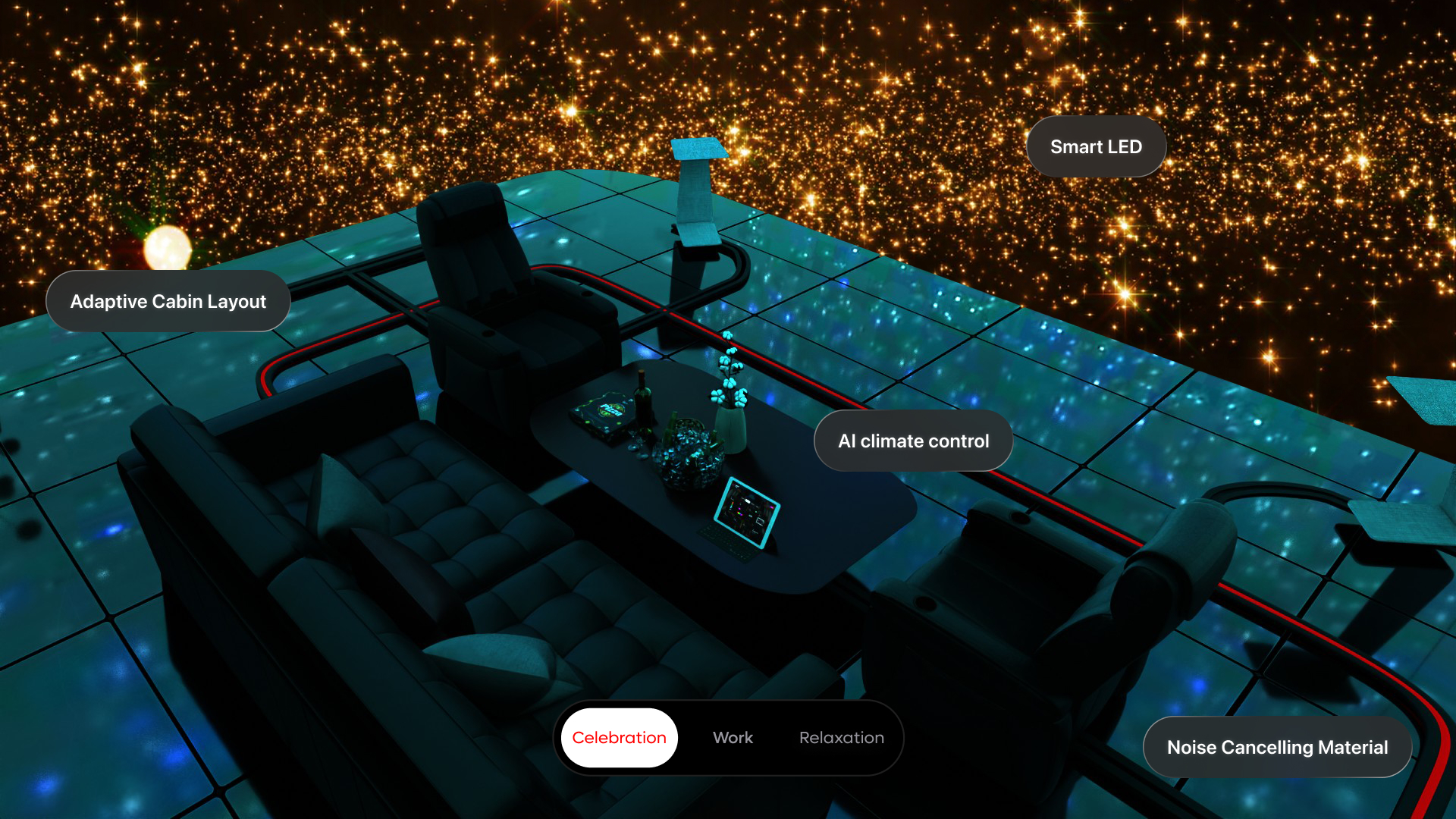
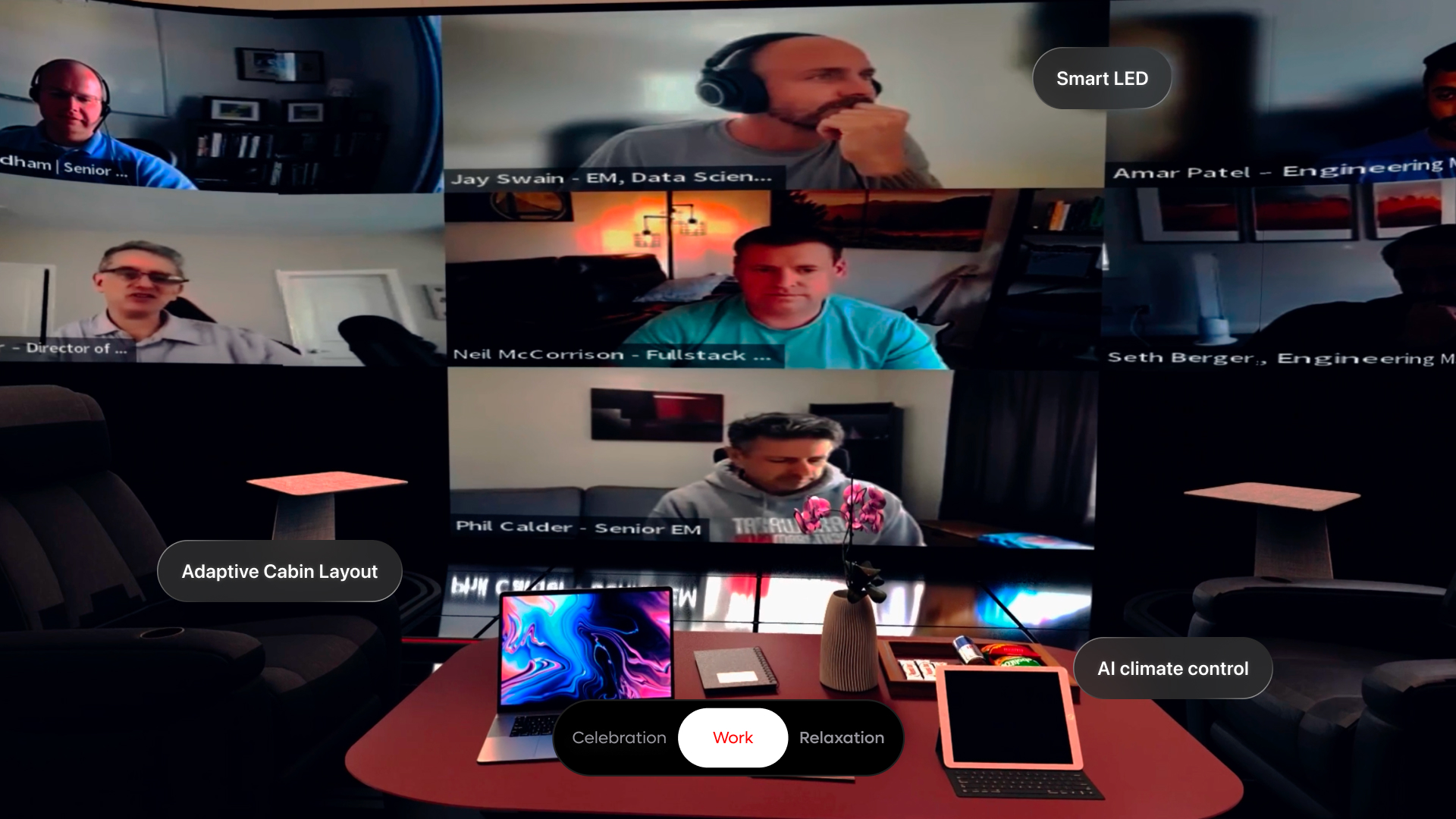
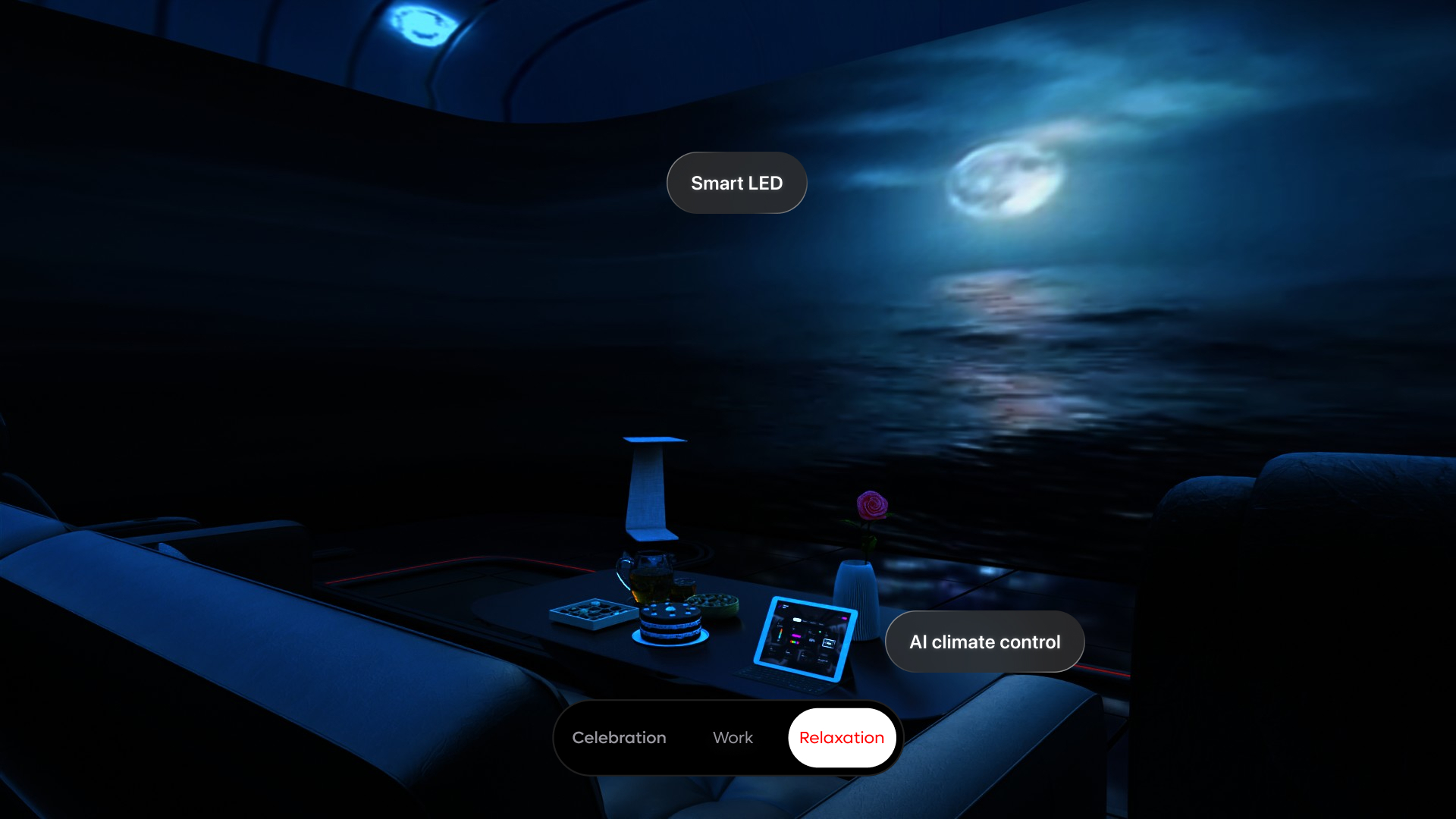
3D renders: Celebration, Work, and Relaxation modes (Blender)
Booking Flow, 3D Environments, and AI Process
The Celestial Oasis booking integration feels like a tier upgrade discovery, not a commercial prompt. Discovery is surfaced contextually based on fare class and loyalty tier. The sequence: Discovery Card → Explore → Seat Selection → Book. In-flight: one decision (mode), everything else is automatic.
- Feature-first reveal: modes, privacy, connectivity before price
- Mobile-first: booking flow works identically across breakpoints
- Concept film: produced with Runway and MURF.AI for the competition pitch
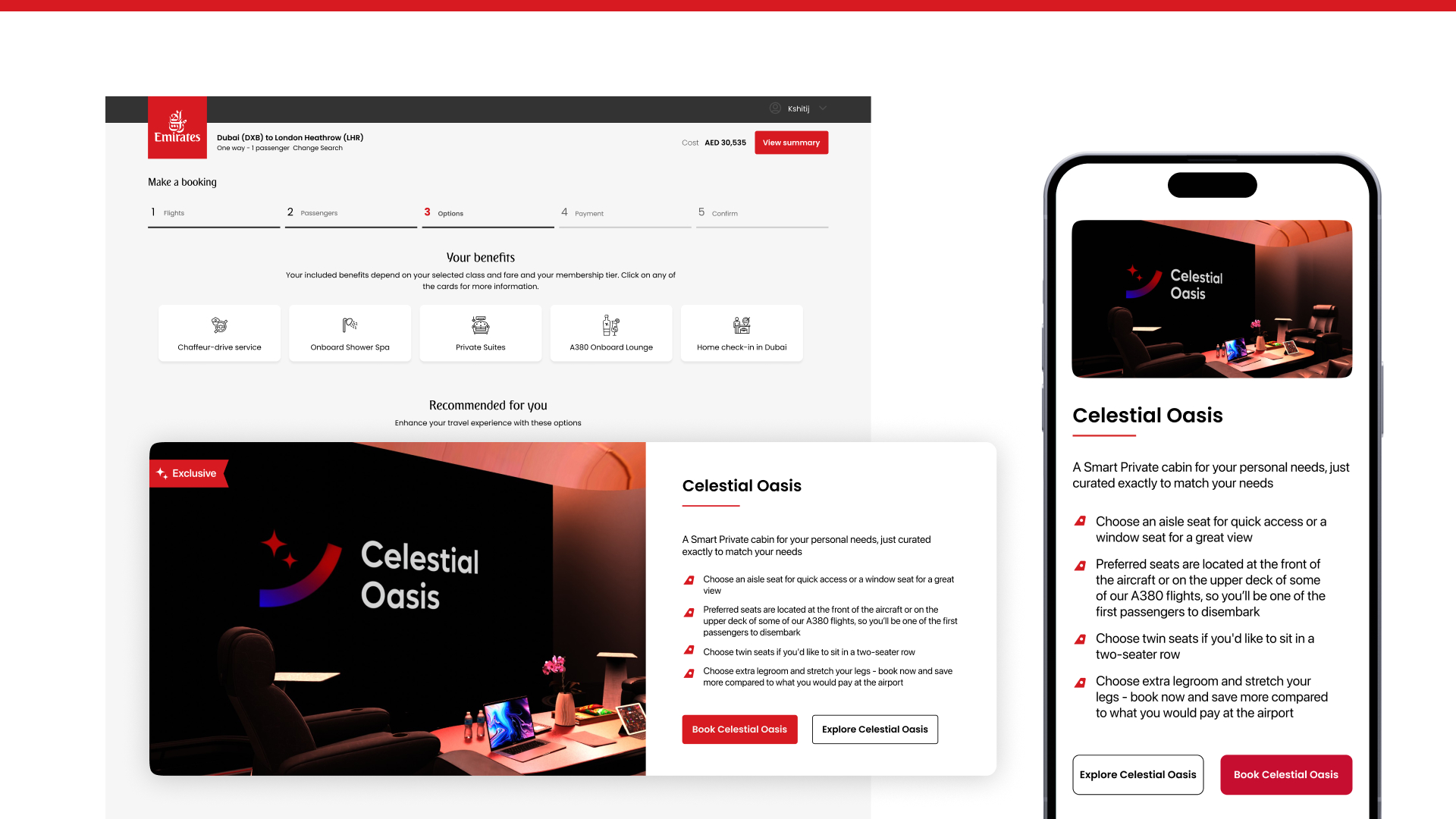
Won Collab-O-Ready Intensive 5.0
Celestial Oasis won the competition, pitching to industry judges in a competitive cohort format. The win was attributed not just to concept ambition but to credibility — a working business model, a defensible partner ecosystem, physically realizable cabin constraints, and a CX arc extending well beyond the flight.
- $15.4M projected Year 1 revenue at 55% occupancy
- Scale to $146M in Years 2–5 at full deployment
- 6.2 lakh customers served across the scaled model
What This Project Taught Me About Luxury and Design Credibility
Luxury UX is about invisible control — the best premium experience feels effortless because all design complexity is resolved in advance. Business viability is part of the design — the revenue model and partner ecosystem were co-designed with the experience. Unspoken frustrations surface through empathy, not feature requests.
- The most important UX decision was what to remove, not what to add
- AI tools accelerated every phase — research, spatial visualisation, pitch video
- A credible business case made the design compelling to judges — vision alone wouldn't have won
Ask About This Project
Ask about this project